



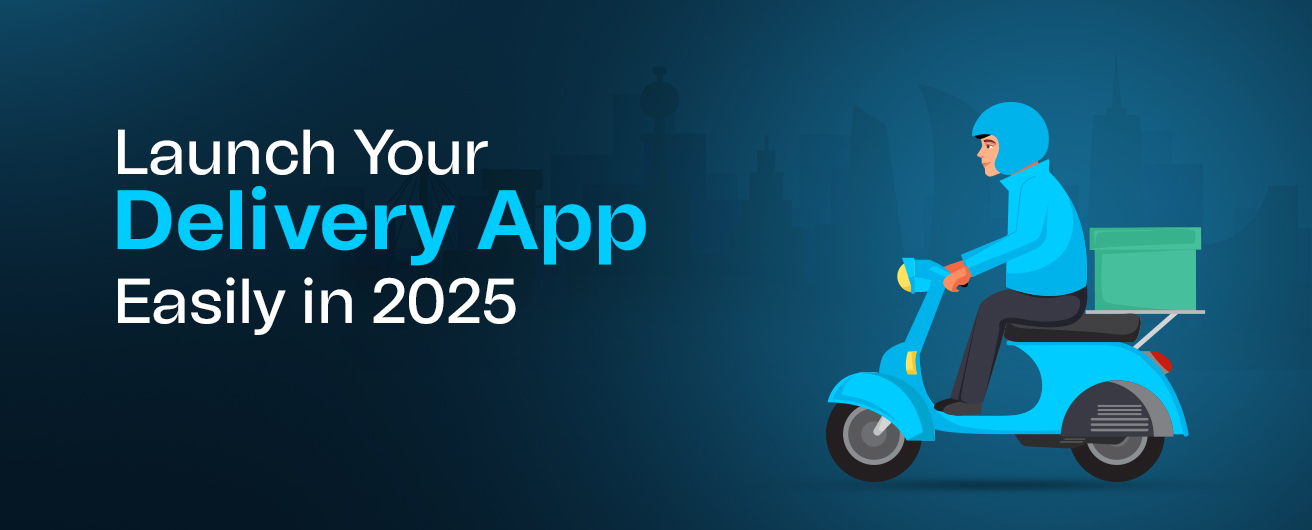
Launch Your Delivery App Easily in 2025

Arup Sarkar
12 Dec 2025
Share on


Delivery apps have already become a part of our lives, and the reason is quite simple — convenience. Not only do they help us save time on cooking and traveling to food shops, but they also provide users with a wide range of choices.
In response to Statista, the number of people ordering food online is projected to reach 2.5 billion users in 2029. Therefore, developing your own delivery app is a promising initiative that can benefit your business. You can expand your customer base and gain a competitive advantage over those who have not yet embraced digitalization. Consider offering features such as real-time order tracking, which allows users to see the status of their delivery. Additionally, include custom recommendations based on user preferences and past orders to enhance the customer experience. Offering multiple payment options, including digital wallets and contactless payments, can also make the app more user-friendly and accessible.
In this article, we will talk about the types of food delivery apps and list their main features. At the end, we will cover the stages of development and discuss how much it can cost you. The food delivery market is expected to continue its rapid growth, driven by increasing consumer demand for convenience and variety. With a growing population and busy lifestyles on the rise, more people are turning to these apps as a staple in their daily routines. This trend shows a major opportunity for new firms to capture a share of this rising market.

The average cost for on-demand mobile delivery app development can range between $60,000 to $200,000 and take from 4 to 9 months. Such services may include a customer app, courier app, business app, and admin panel, each with its unique development challenges.
Let's start with exploring the different types of on-demand delivery apps and platforms.
In this article, we will focus on food delivery apps. We'll explore a variety of aspects, starting from idea validation to developing essential features and implementing monetization strategies.
Food delivery services are a mediator between a hungry customer and a restaurant. Here is the scheme of how it works.

Some big food corporations, like McDonald’s or KFC, also built their own delivery apps that work only with their restaurants. It might be useful when a customer knows exactly what they want, but having a wide choice of restaurants is much more interesting, right?
Food delivery services act as intermediaries connecting customers with restaurants. Food delivery platforms serve as a bridge between diners and eateries, streamlining the ordering process.
Imagine you're craving something spichies , let’s try some Asian cuisine, like a bowl of your favorite ramen. Here's an overview of how the process moves forward.

Almost every big restaurant and popular food chain has its own delivery app, but those apps only work for their own food. That’s fine if you already know exactly what you want, but let’s be real — it’s way more exciting to have a bunch of choices, right?
So, if you’re planning to build an on-demand delivery app, the first thing you need to figure out is what kind of service fits your business. There are basically two main options: a marketplace platform or a complementary platform with its own delivery system.
Complementary platforms have their perks. They mesh right into a restaurant’s regular workflow, so owners get more control over how deliveries happen. Plus, restaurants can keep their own branding and stay connected to their customers, which really helps with loyalty. These platforms usually give restaurants more freedom with their menus and pricing too.
Let’s be real—just having a clever idea won’t get your delivery app far these days. The market’s packed, and the folks who win are the ones who nail the details. A modern delivery setup isn’t just a single app; it’s a trio, each piece doing its part and syncing up with the others.
Here’s what you absolutely need if you want your app to keep up.
1. The Customer App: Make It Effortless
Think of this as your shop window. If it feels clunky or confusing, people are gone before you know it.
Real-Time GPS Tracking: People want to watch their order move, minute by minute. If they can’t see their driver getting closer, they’ll worry, and your support team gets flooded with calls.
Advanced Search & Filters: Let folks sort by delivery time, price, rating, or what fits their diet (like vegan or gluten-free). The quicker they spot what they want, the sooner they’ll buy.
Secure Multi-Payment Gateway: Paying should never be a hassle. Make sure you’ve got credit cards, digital wallets (think Apple Pay and Google Pay), and even cash on delivery.
In-App Chat/Call: Customers need a way to message or call drivers without handing out their own number. It’s safer and keeps things simple when they need to clarify directions.
2. The Courier App: Keep Things Moving
Your drivers need tools that help them work fast and smart. Every minute counts.
Route Optimization: Plug in Google Maps or Waze. The app should always show the quickest and least-crowded route. That way, orders arrive on time and drivers save on gas.
Order Acceptance/Rejection: Give drivers a clear “Accept” or “Reject” button, maybe with a timer. They need control over which jobs they take.
Earning Dashboard: Drivers want to know how much they’re making. Show daily, weekly, and monthly earnings, plus tips and bonuses. This keeps them motivated and less likely to leave for a competitor.
Proof of Delivery: No more arguments about missing packages. Let drivers snap a photo or get a digital signature when they hand off an order.
3. The Admin Dashboard: Command Central
Customers and drivers see the front end, but the real magic happens behind the scenes. The admin dashboard is where you keep tabs on everything—orders, payments, drivers, customer issues. This is the heartbeat of your business, and you can’t afford to get it wrong.
 Bird’s-Eye View Management: Picture a live map that shows where every driver is right now, plus the status of every order on the go.
Automated Dispatch System: You can hand out orders yourself, or let smart software do it for you. The system auto-assigns orders to the closest driver, so customers aren’t left waiting.
Data Analytics & Reporting: You can’t improve what you don’t track. The dashboard needs to break down things like peak order times, top-selling items or regions, customer retention, and how drivers are performing.
Content Management: Updating menus, changing prices, managing inventory, or launching promos should be quick and easy—no need to call in a developer every time you want to tweak something.
User Experience: Real-time tracking and push notifications build trust with users and cut down on support requests.
Logistics: Route optimization and automated dispatch help you save on fuel and get deliveries out faster.
Monetization: An in-app wallet and promo codes encourage people to spend more and stick around longer.
Trying to launch a delivery app without these essentials?
That’s like driving a car with no dashboard. Sure, you can hit the gas and get moving, but you’re flying blind—you don’t know your speed or how much fuel you’ve got left. When you add these features, everything clicks. The customer, the delivery driver, the business—they all stay connected, and the whole thing just works smoother.
List of Contents
Launch Your Delivery App Easily in 2025
What is a Delivery App?
What exactly is a food delivery service, and how does it work?
The Anatomy of a Success: What Makes a Delivery App Stand Out
Summary Table: Feature Checklist:
Why This Matters
